

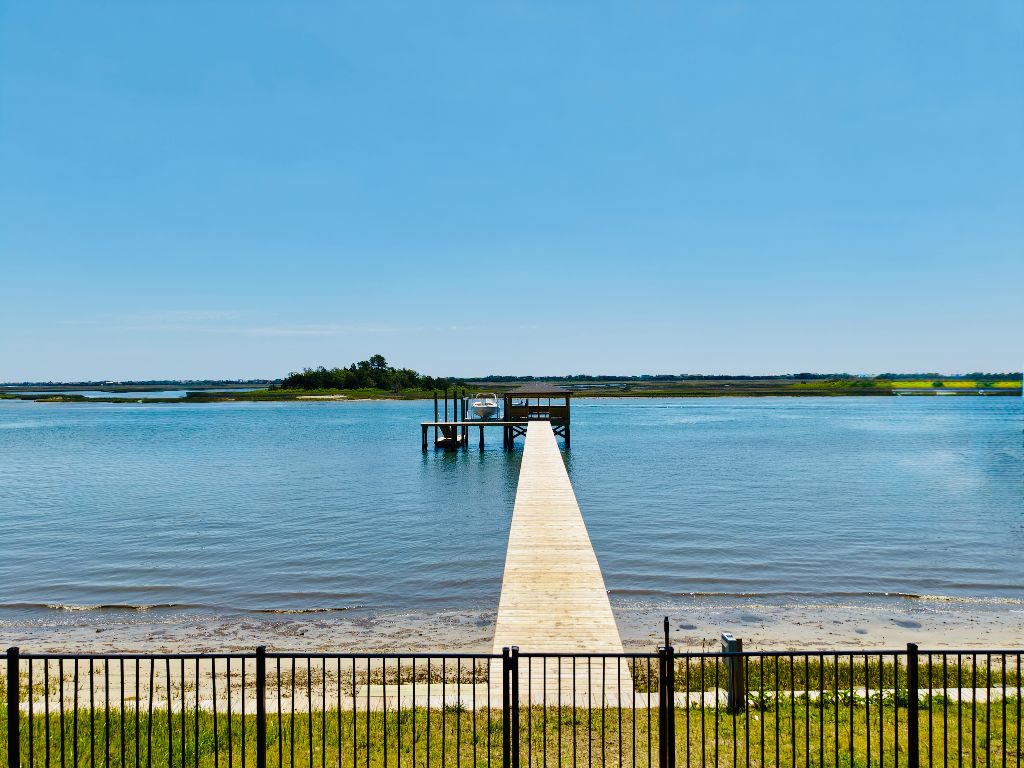
- Walk the dock and photograph every hardware connection, piling, and float drum from 4 angles. Timestamp matters for insurance.
- Inspect for any loose fasteners, cracked boards, or stressed cables. Tighten everything you can.
- Verify your homeowner's policy includes the dock — many NC policies exclude detached structures by default.
- Top off boat lift battery and test the manual crank.
- Check NOAA tides for storm-surge timing relative to high tide.
72 hours out — assessment
24–48 hours out — physical prep
- Floating docks: Detach the gangway. Cable the floating section to the bulkhead pilings on the leeward side using ¼-inch stainless cable.
- Fixed piers: Remove loose deck furniture, kayaks, and gear. Strap down or bring inside.
- Boat lifts: Lower the cradle to maximum down position. Cable cradle to the lift pilings. Disconnect the motor and bring battery inside.
- Boats: Move to a hurricane hole, dry storage, or a friend's inland slip. Do not ride out a Cat 2+ on the lift.
- Bulkheads: Clear weep holes of debris so water can drain after surge.
During the storm
Stay off the dock. Wind-driven waves on coastal NC docks have killed people who went out to "check on the boat" during the eye. Nothing on a dock is worth your life. Watch from a safe distance.
Post-storm — first 48 hours
- Photograph all damage before touching anything. Insurance adjusters require pre-cleanup documentation.
- Do not walk onto a dock until you have verified each piling is still solid by probing with a pole.
- If decking is missing or framing is exposed, treat the dock as condemned until inspected.
- Call us at (910) 612-6107 for an emergency assessment. Storm-damage estimates move to the front of our schedule.
- File your claim within 24 hours with photos and a timestamp.
Build standards that survive
After Hurricane Florence (2018), Mark walked dozens of coastal NC waterfronts. The docks that survived shared three traits:
- Every piling driven to refusal — not to a number on a clipboard
- 316 stainless hardware throughout the saltwater splash zone
- Floating sections cabled or detached pre-storm
The docks that failed had at least one shortcut in those three areas. Build standards matter more than any prep checklist.
ML
About the author
Mark Lipe is the founder of Intracoastal Installs LLC. He has been building structures for 35 years and docks on the North Carolina coast since 2022 — he writes from direct field experience, not marketing copy.
More about Mark