

FROM THE WATERFRONT · WHERE QUALITY MEETS THE WATER LINE
Coastal NC Dock Building Resources
Guides on CAMA permits, dock cost, materials, and design — written from 35 years building structures.
BROWSE BY TOPIC
Jump to what you need
START HERE
The two guides every coastal NC dock owner should read
 Permits & Regulations
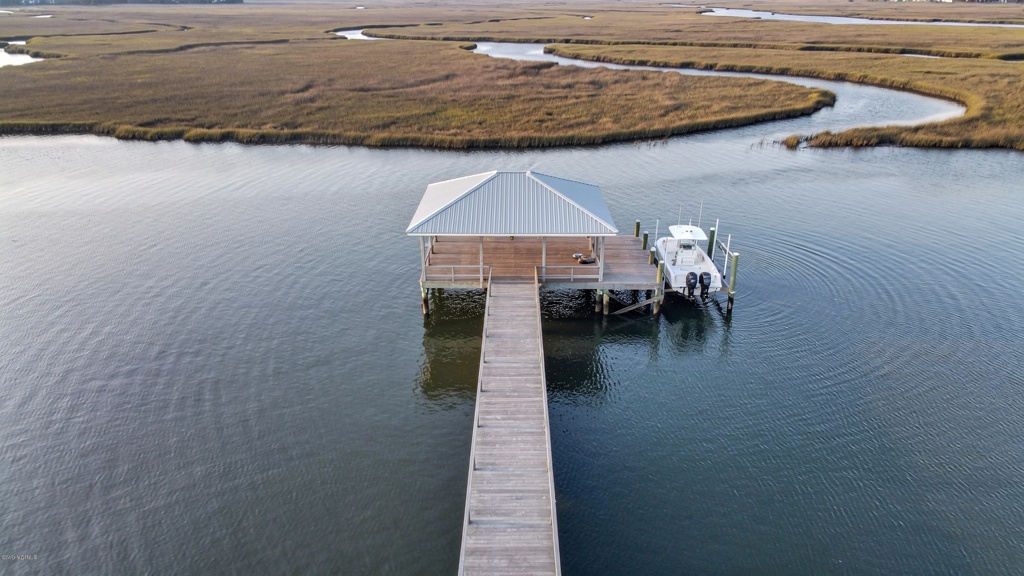
CAMA Permit Guide for Coastal NC Docks (2026)
In coastal North Carolina, almost every dock, pier, or boat lift requires a CAMA general permit issued by the NC Division of Coastal Management. Permits cost $474, take 14–30 days, and are filed through county field offices in Pender, New Hanover, and Onslow Counties.
Read guide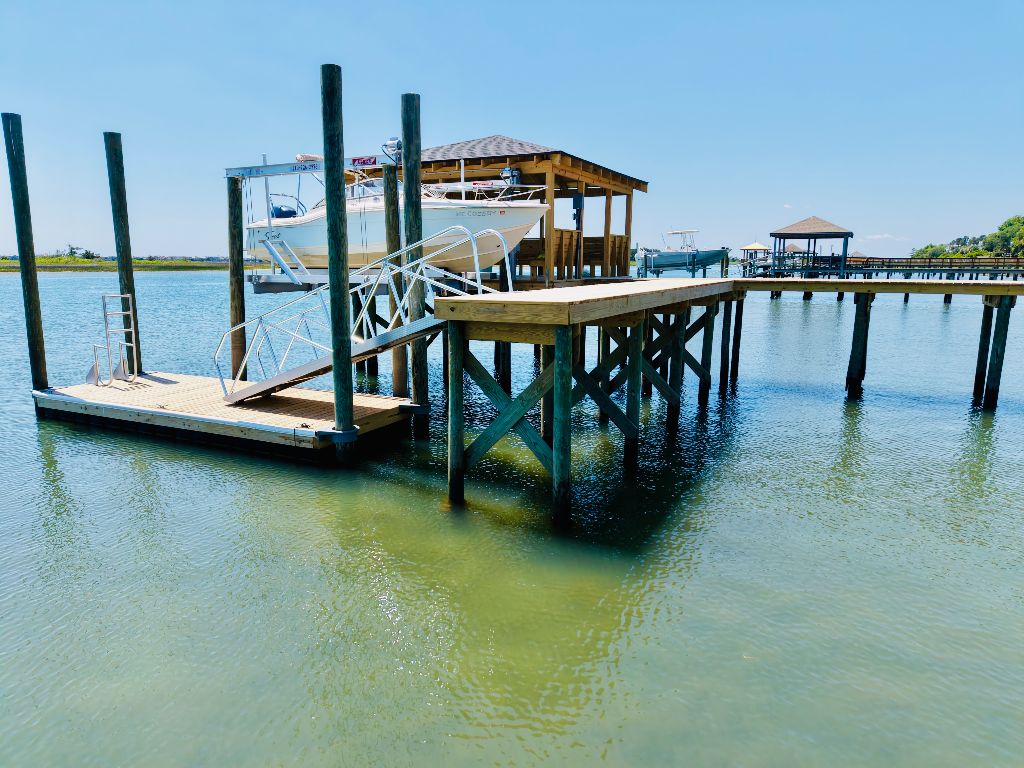 Cost & Pricing
How Much Does a Dock Cost in Coastal NC? (2026 Pricing)
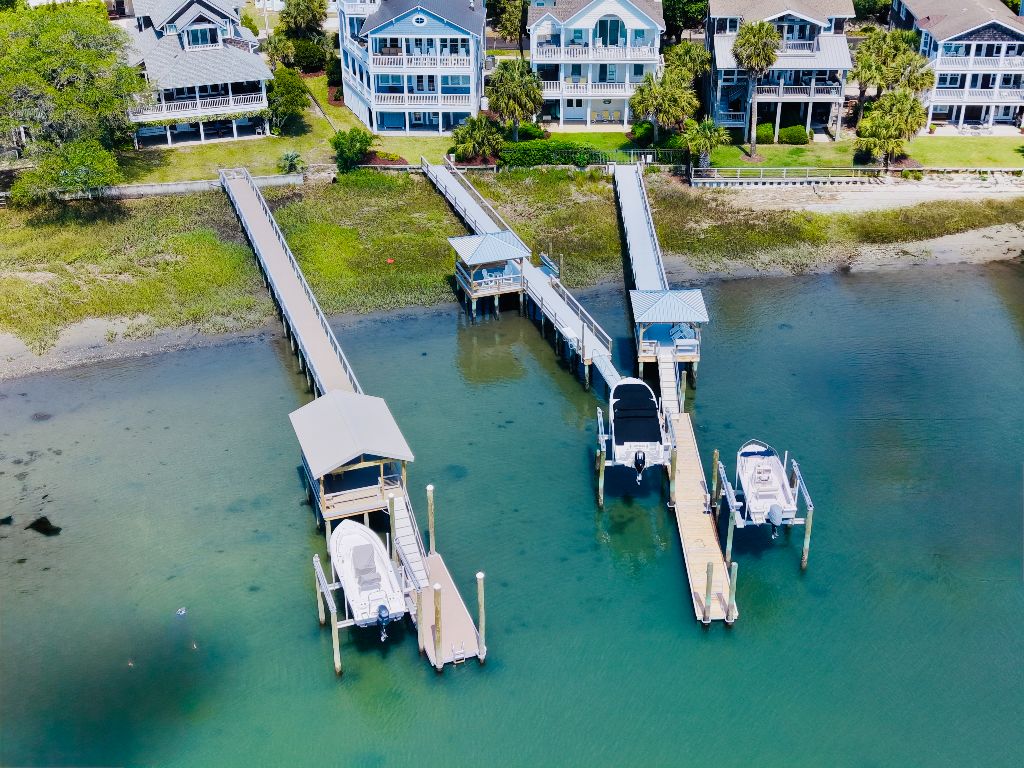
In coastal North Carolina, a residential floating dock costs $12,000–$35,000, a fixed pier costs $18,000–$60,000, and a 10,000-lb boat lift costs $7,500–$14,000 installed. Pricing depends on length, materials, water depth, and CAMA permit cost.
Read guidePERMITS & REGULATIONS
CAMA, county rules, and what to file
COST & PRICING
Real numbers for coastal NC dock projects
MATERIALS
Lumber, hardware, and what survives the salt
 Materials
IPE vs Pressure-Treated Lumber for Coastal NC Docks
IPE Brazilian hardwood costs 3–4× more than pressure-treated southern yellow pine but lasts 30+ years with minimal maintenance vs. 12–15 years for PT. For a forever-home dock on the saltwater side, IPE is often the better long-term value.
Read guide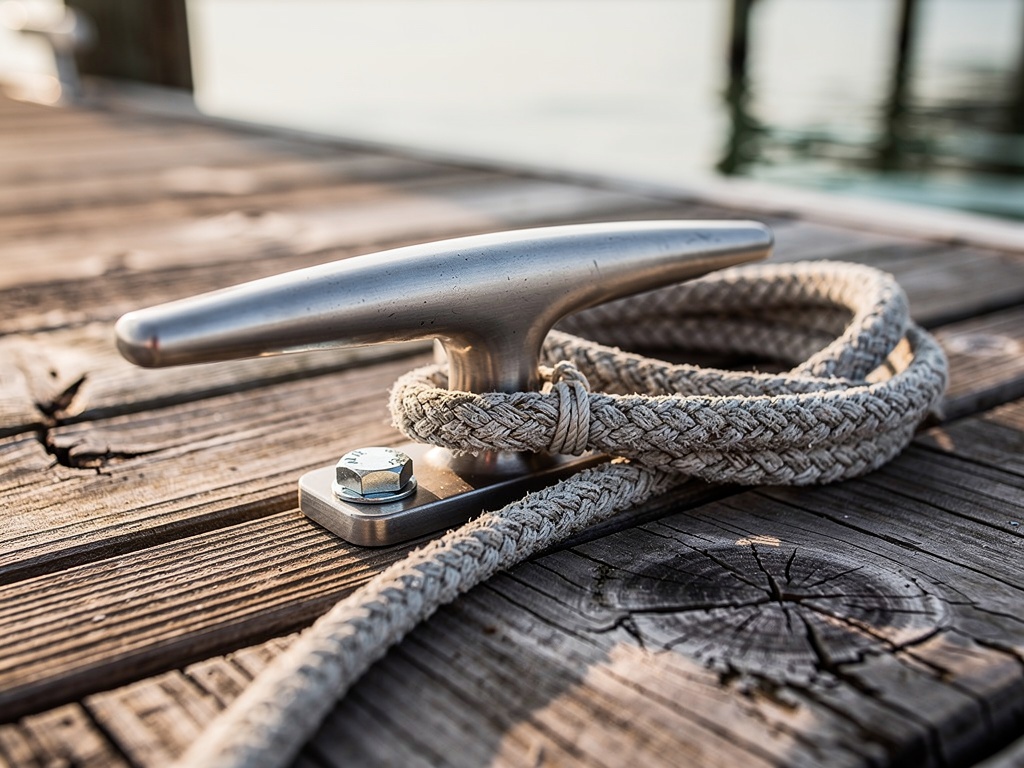 Materials
316 Stainless vs Hot-Dipped Galvanized for Coastal NC Docks
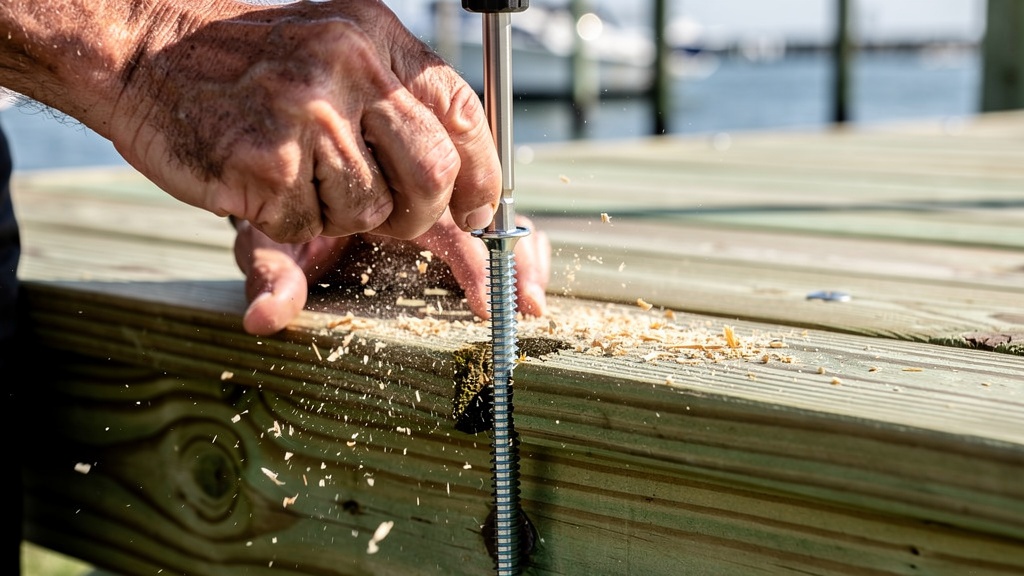
On coastal NC docks exposed to salt spray, 316 stainless steel hardware lasts indefinitely while hot-dipped galvanized fails in 5–7 years. The stainless upgrade costs 3–4× per fastener but eliminates the single most common cause of dock failure.
Read guideDESIGN & PLANNING
Choosing the right dock for your waterfront
 Design & Planning
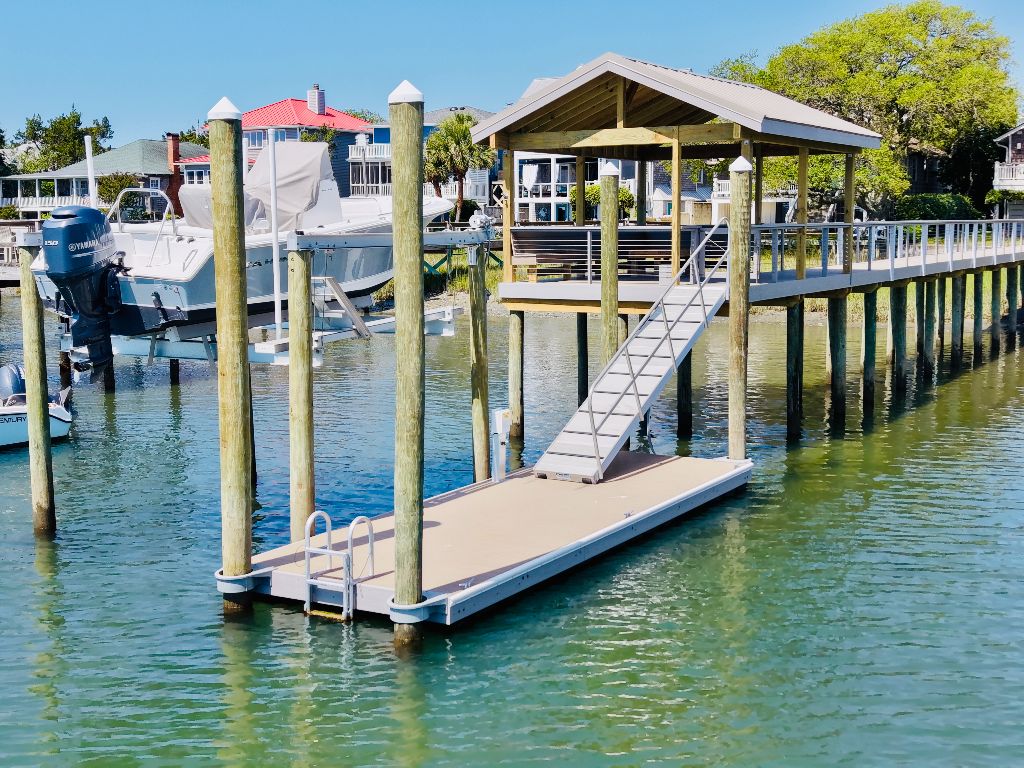
Floating Dock vs Fixed Pier — Which is Right for Coastal NC?
On coastal NC waterfronts with 3–4 ft tide swing, floating docks are the better choice for most sound-side and ICW homes. Fixed piers win in deep, sheltered water with minimal tide variation or where a roof / lift is required.
Read guide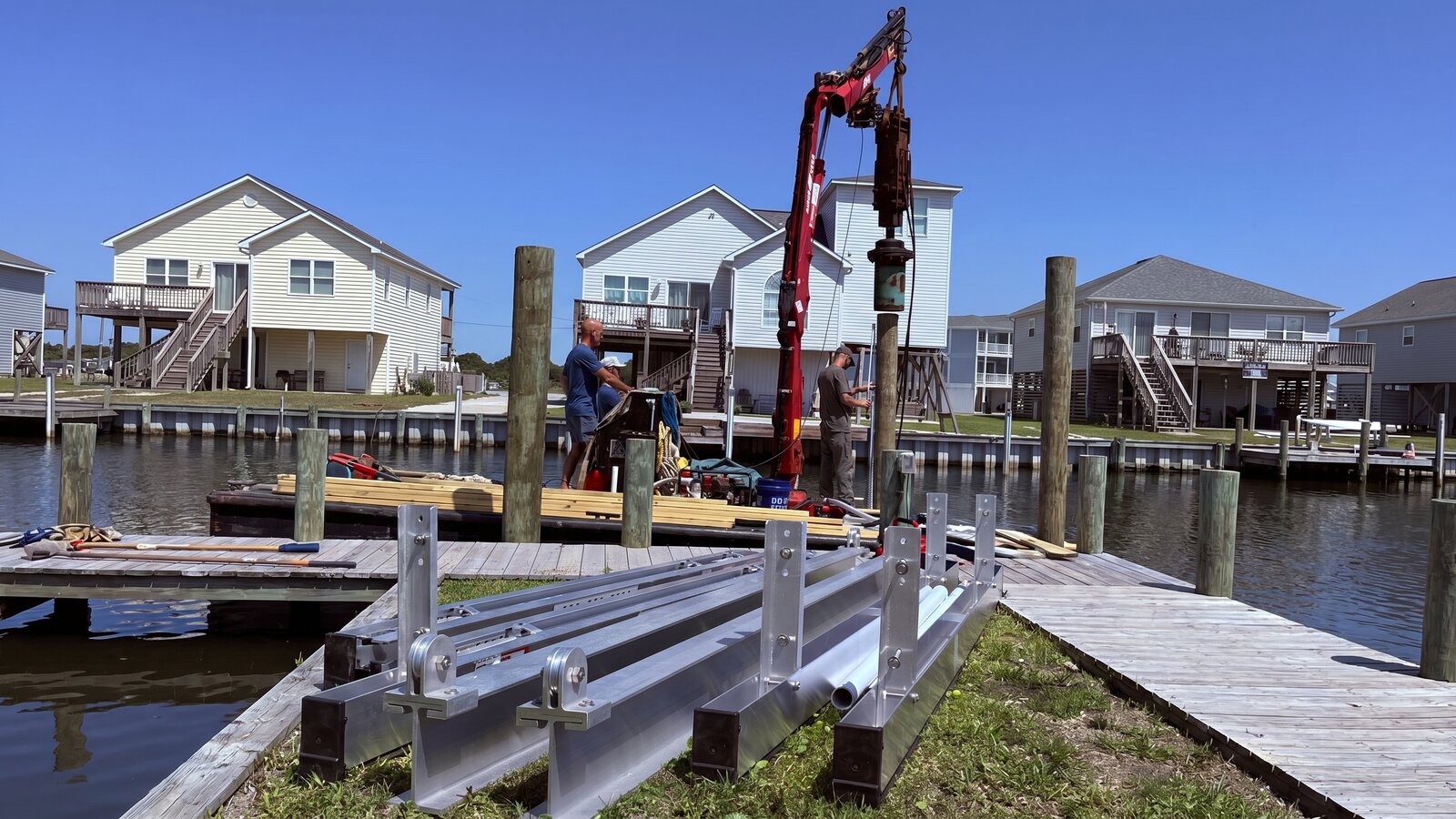 Design & Planning
What "Pilings Driven to Refusal" Actually Means
Driving a piling "to refusal" means continuing to drive it until the hydraulic hammer cannot advance it further into the substrate — usually 12–22 ft in coastal NC. This is the single most important factor in whether a dock survives a hurricane.
Read guide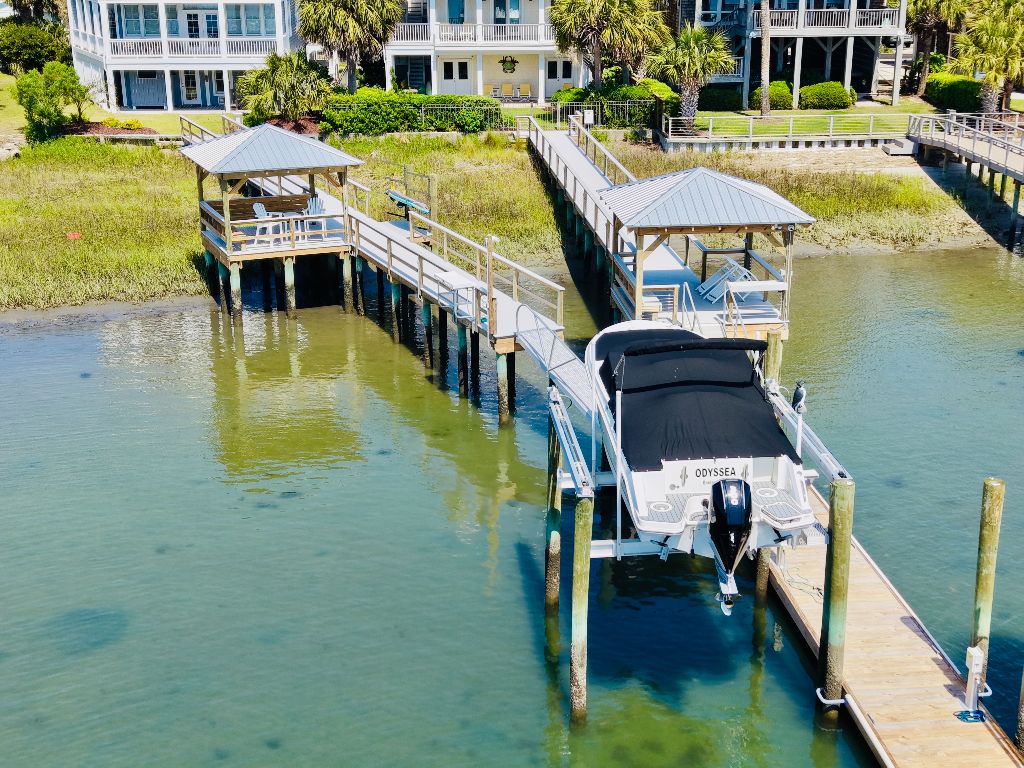 Design & Planning
How to Size a Boat Lift for Your Coastal NC Dock
Take your boat's dry weight, add fuel and gear weight, then add 25% safety margin. A 22-ft center console with a 250-hp outboard typically needs a 10,000-lb 4-post lift. Under-sizing is the #1 cause of premature lift failure in coastal NC.
Read guide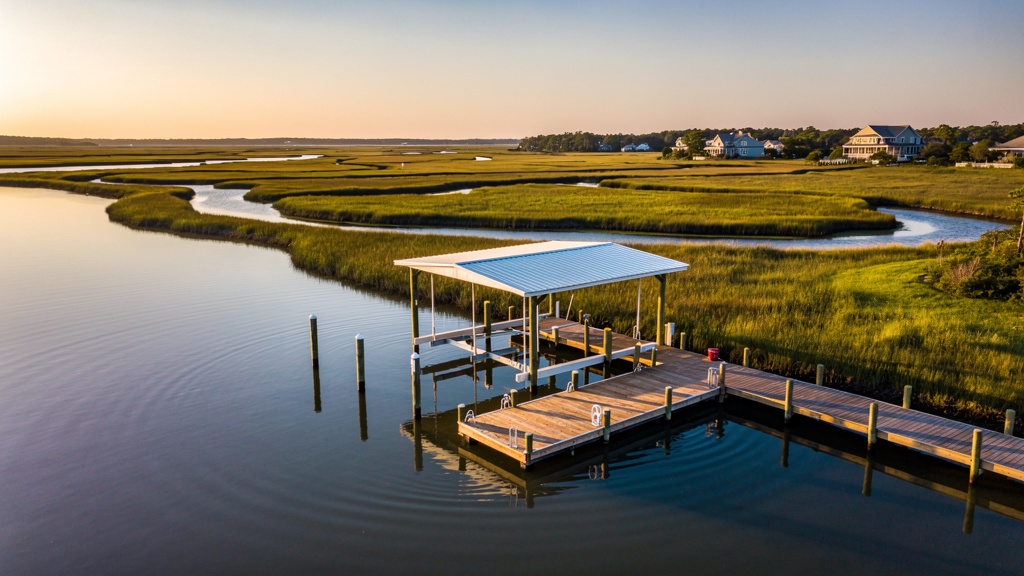 Design & Planning
How to Choose a Coastal NC Dock Builder
A reputable coastal NC dock builder will be NC GC-licensed, fully insured, provide an itemized estimate, drive pilings to refusal, use 316 stainless hardware, carry written warranties, supply local references, and handle CAMA permits in-house.
Read guide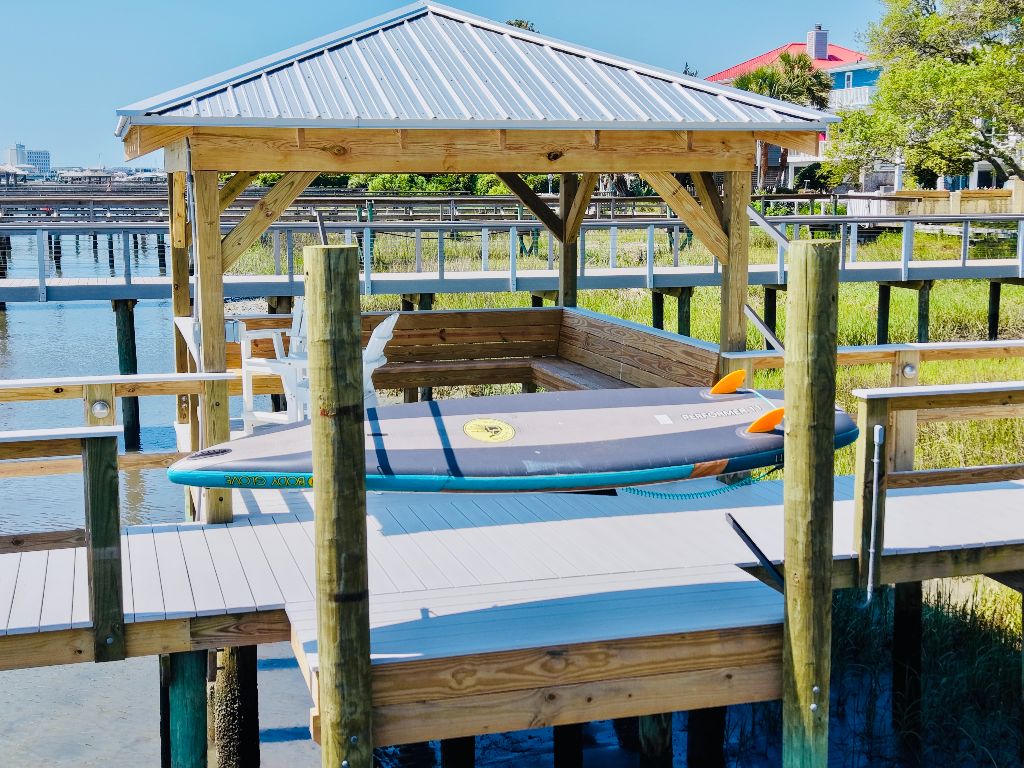 Design & Planning
Waterfront Gazebos for Coastal NC — Design & Permit Guide
Coastal NC waterfront gazebos must be rated to 130 mph wind, sit on pilings driven to refusal, and stay within CAMA's 800 sq ft total platform limit. Typical builds cost $18,000–$45,000 and take 7–14 working days.
Read guideMAINTENANCE
Seasonal care and repair decisions
 Maintenance
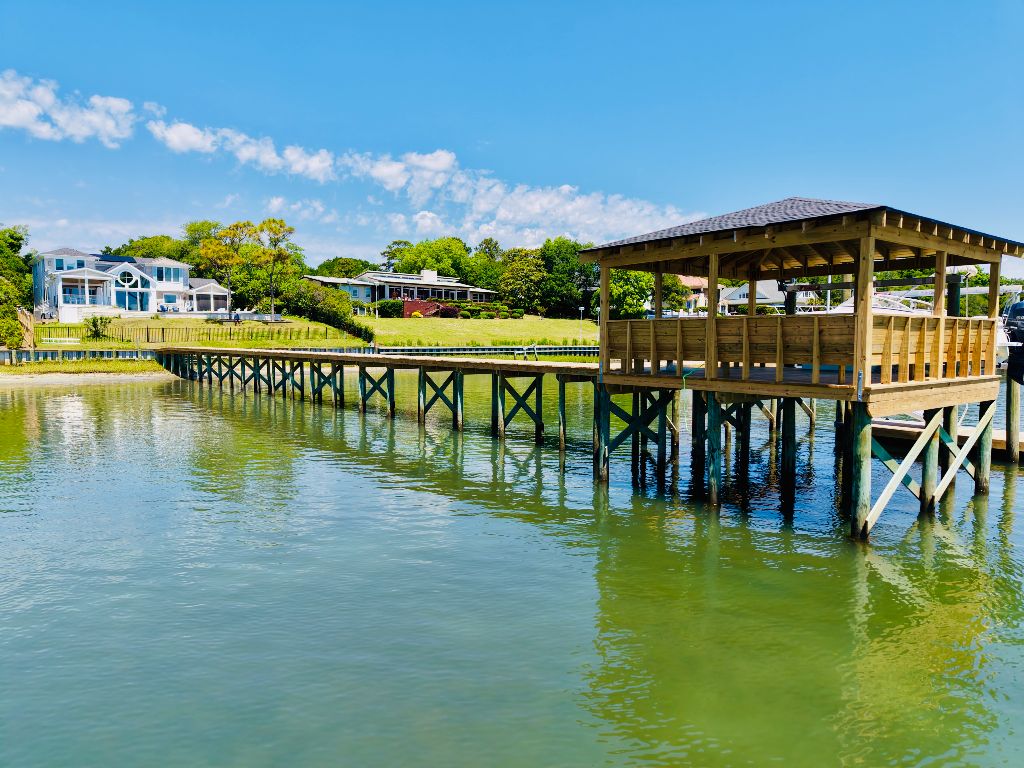
Annual Dock Maintenance Schedule for Coastal NC
A coastal NC dock needs four seasonal checkpoints: spring structural inspection (March), summer hardware rinse (June), fall fastener check (September), and pre-storm tie-down (June–November). Two hours per season prevents 90% of failures.
Read guide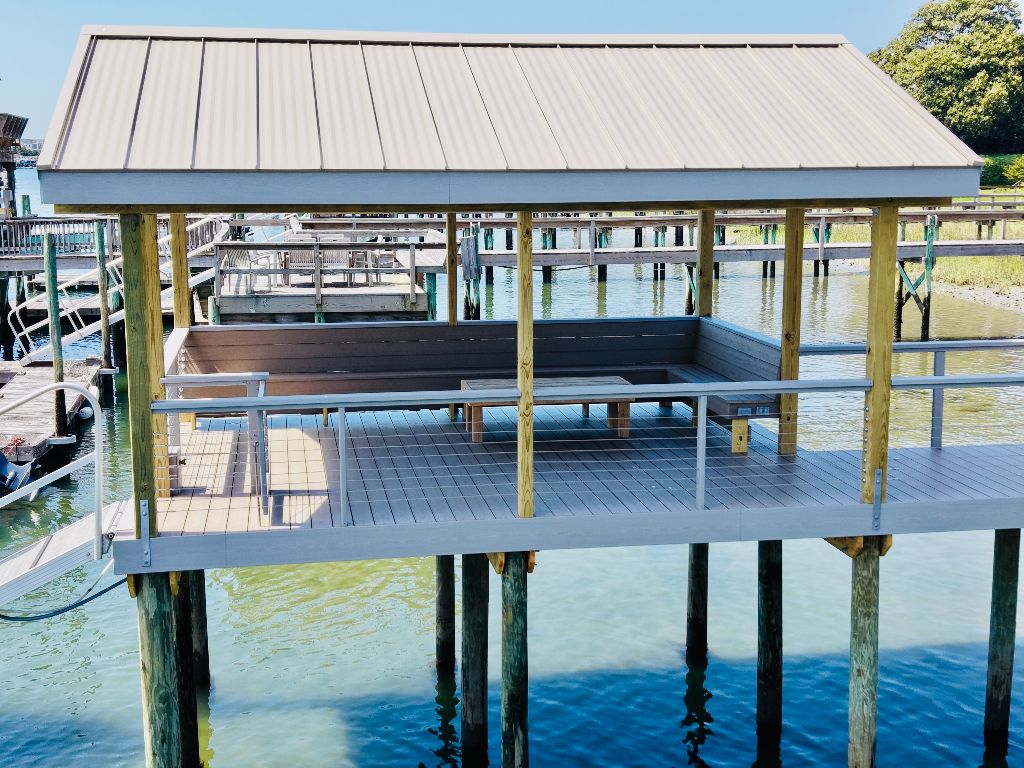 Maintenance
Dock Repair vs Replace — How to Decide
Repair if the structural pilings are sound and total repair cost is under 60% of a replacement. Replace if pilings show waterline decay, if the dock is over 25 years old, or if storm damage exceeds 40% of the structure.
Read guideSTORM & HURRICANE
Prep, recovery, and build standards
FAQ
About the resource library
Who writes these guides?
Are the cost numbers in these guides current?
Where should I start if I am thinking about a new dock?
I am dealing with storm damage right now — what should I read?
Can I share these guides with my insurance adjuster or HOA?
How often do you publish new guides?
Have a question we did not answer?
Call us or send a quick note — we answer real questions, not lead-form spam.