

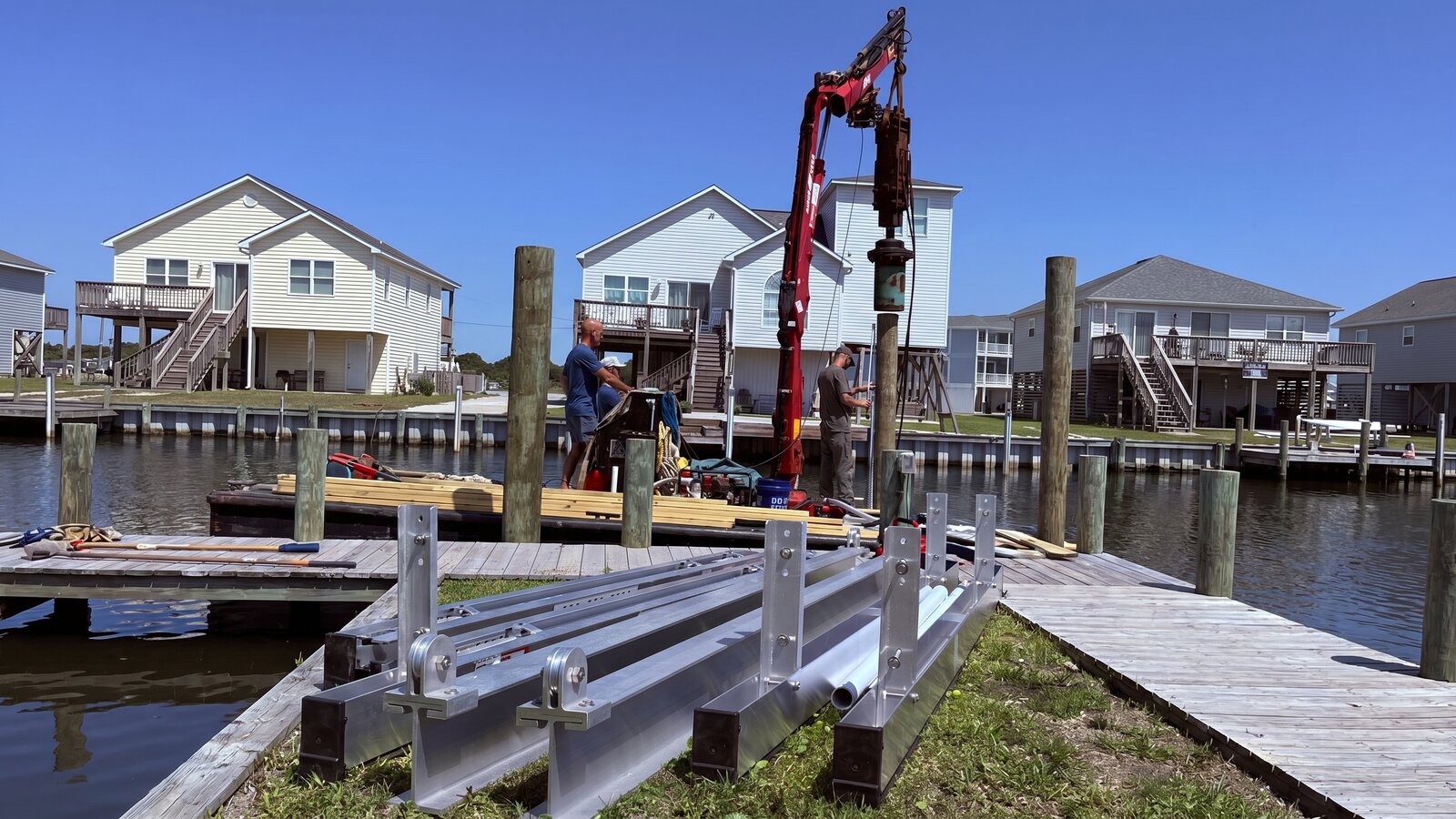
What "Pilings Driven to Refusal" Actually Means

DESIGN

What "Pilings Driven to Refusal" Means — And Why It Matters

6 min read · Updated · By Mark Lipe

QUICK ANSWER

Driving a piling "to refusal" means continuing to drive it until the hydraulic hammer cannot advance it further into the substrate — usually 12–22 ft in coastal NC. This is the single most important factor in whether a dock survives a hurricane.

The definition

"Refusal" in coastal pile-driving means the point at which the hydraulic hammer can no longer advance the piling more than 1 inch per 10 hammer blows at full energy. In coastal NC, refusal typically happens between 12 and 22 feet of penetration, depending on substrate:

  • Sandy bottoms (most ICW): 12–16 ft
  • Mixed sand / clay (sound side): 14–18 ft
  • Soft mud over hardpan (creek mouths): 18–22 ft

Why "to a number" doesn't work

Some contractors quote piling depth as a fixed number — "we drive to 12 feet." This is dangerous because:

  1. Substrate varies even within one dock footprint. A piling 8 ft from another may need 4 ft more depth.
  2. Stopping early means the piling is sitting on a soft layer, not refusing on hardpan.
  3. The first storm will rock that piling loose; subsequent tides walk it out.

How to verify your contractor did it

Three things to ask for in writing on every fixed-pier build:

  1. Pile log: A field log showing depth-of-refusal for each piling. We provide this as part of our as-built sketch.
  2. Hammer spec: Hydraulic hammer with 8,000+ ft-lb energy. Drop hammers and vibratory rigs cannot achieve true refusal in coastal NC substrates.
  3. Witness: Be on site for at least one piling. Watch the last 10 blows — they should advance the piling less than 1 inch total.

FAQ

Quick questions

>

How deep should dock pilings be driven in NC?

Coastal NC pilings should be driven to refusal — the point where the hydraulic hammer cannot advance them further. This is typically 12–22 ft depending on substrate, not a fixed depth.
>

What is hammer refusal in pile driving?

Hammer refusal is the point at which a hydraulic pile-driving hammer can no longer advance the piling more than 1 inch per 10 blows at full energy. It is the only reliable indicator that the piling has reached bearing capacity.

Ready to put this to work on your dock?

Free site evaluation. Written estimate within one business day.