

| Factor | Floating Dock | Fixed Pier |
|---|---|---|
| Tide swing > 3 ft | ✅ Excellent — rides the tide | ⚠️ Requires ladder at low tide |
| Storm performance | ⚠️ Must detach pre-storm | ✅ Engineered to stay |
| Lifespan | 15–20 years | 25–35 years |
| Cost range (residential) | $12,000 – $35,000 | $18,000 – $60,000 |
| Roof / lift attachment | ❌ Not practical | ✅ Native fit |
| Build time | 3–7 days | 7–14 days |
| CAMA platform limit | 400 sq ft sheltered | 800 sq ft |
Quick comparison table
When to choose a floating dock
Floating docks win on coastal NC waterfronts where any of these are true:
- Tide swing exceeds 3 ft (most sound-side and ICW homes from Hampstead to Sneads Ferry)
- You need deck-level access to the boat at every water stage
- The bottom is too soft or too deep for cost-effective pilings
- You expect to upgrade or reconfigure the dock within 10–15 years
- Budget is the primary driver
Our floating dock service page covers our build standard in detail.
When to choose a fixed pier
Fixed piers are the better choice when:
- Water depth is consistent (open Cape Fear River, Wrightsville Beach Sound)
- You want a roofed T-head, gazebo end, or covered boat slip
- You need a boat lift attached directly to the pier structure
- Tide swing is less than 2 ft
- You want maximum lifespan (25–35 years vs. 15–20 for floating)
See our fixed pier service page for materials and build process.
The hybrid option
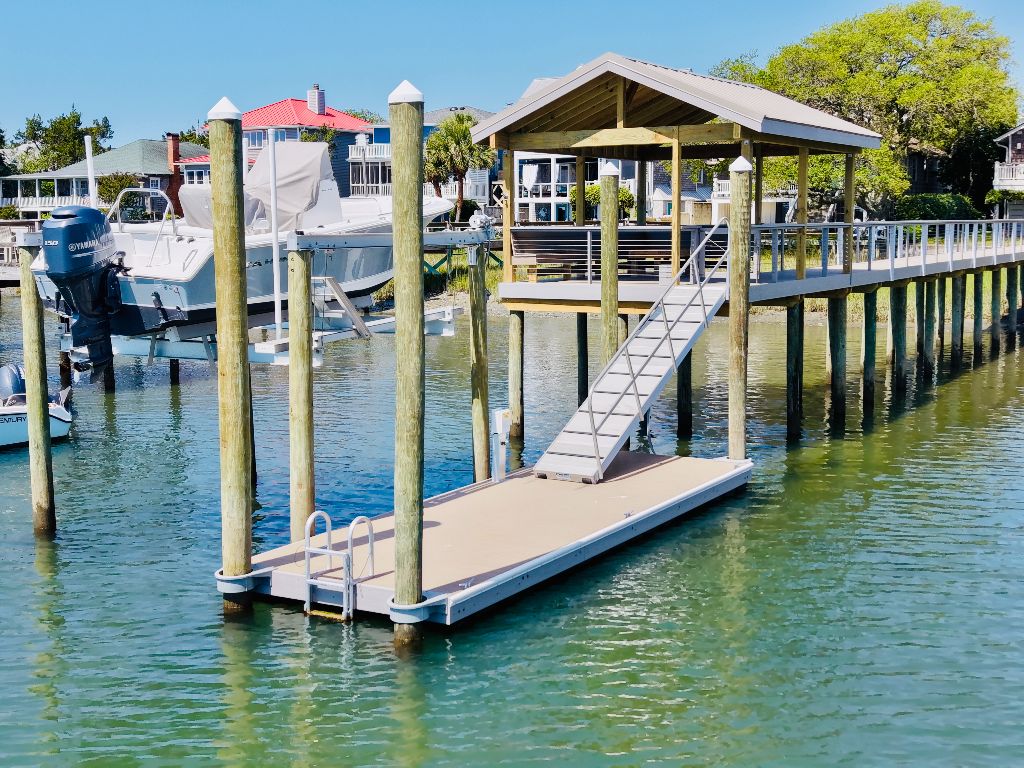
Many coastal NC homeowners get the best of both with a hybrid build: a fixed pier walking out to deep water, then a floating section at the end for tide-following boat access. The hybrid runs $25,000–$55,000 and combines the storm performance of a fixed structure with the tide-following convenience of a float.
ML
About the author
Mark Lipe is the founder of Intracoastal Installs LLC. He has been building structures for 35 years and docks on the North Carolina coast since 2022 — he writes from direct field experience, not marketing copy.
More about Mark